“`html
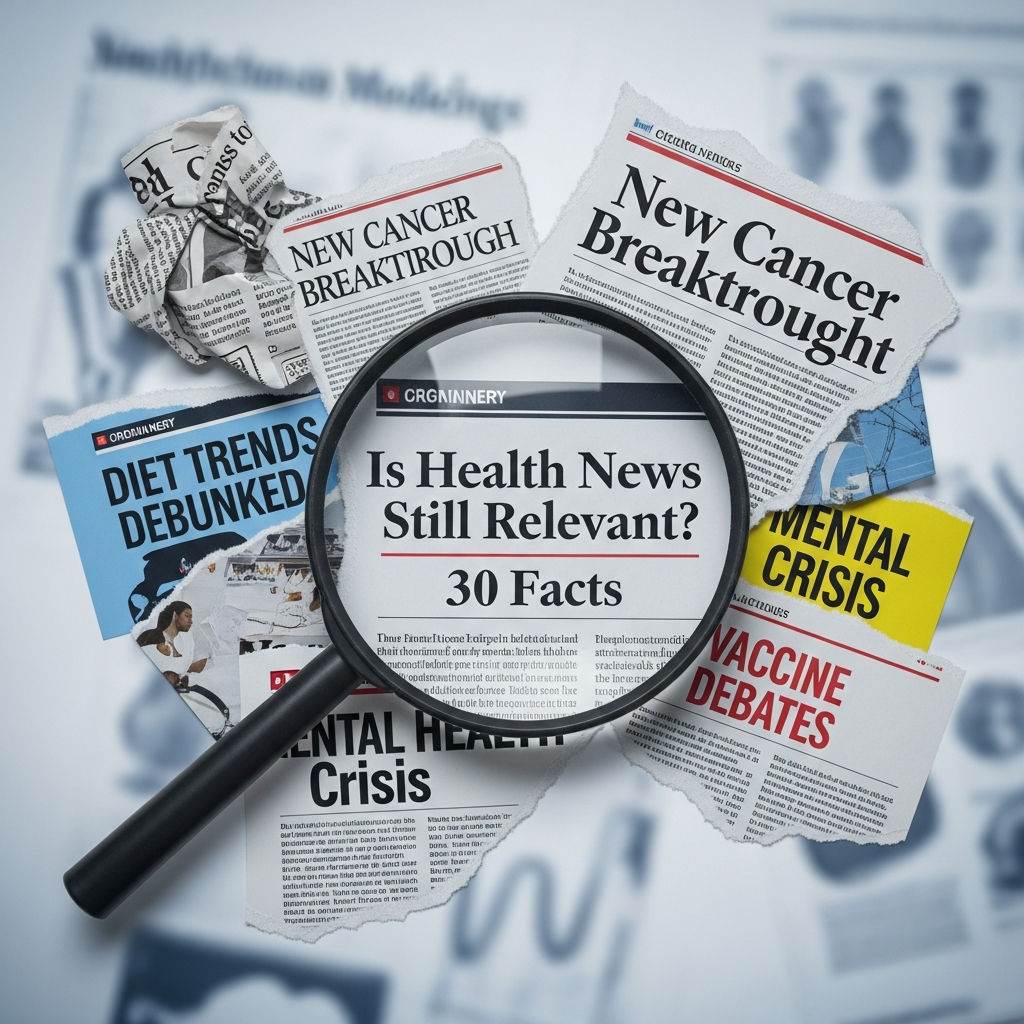
Is Health News Still Relevant? The State of Medical Journalism Today
In an era dominated by TikTok “wellness gurus,” viral Instagram reels, and AI-generated advice, the question arises: Is traditional health news still relevant? With a simple Google search yielding millions of results for any symptom, the gatekeeping role of medical journalism has shifted. However, the need for curated, evidence-based, and timely health information has never been higher.
Health news serves as the bridge between complex laboratory breakthroughs and the general public. While the medium has changed—from morning newspapers to push notifications—the core objective remains the same: empowering individuals to make informed decisions about their well-being. Below, we explore 30 facts that prove why health news is not only relevant but essential in the modern age.
The Shift in How We Consume Health Information
The way we digest news has undergone a digital revolution. We no longer wait for the evening broadcast to hear about a new virus or a dietary breakthrough. This immediacy has both democratized information and created a “wild west” of data.
- Fact 1: Over 80% of internet users have searched for health-related information online at least once.
- Fact 2: Social media is now the primary source of health news for Gen Z and Millennials, often bypassing traditional news outlets.
- Fact 3: The “Infodemic” recognized by the WHO during COVID-19 proved that too much information (including false news) can be as dangerous as the virus itself.
- Fact 4: Video-based health news (YouTube and TikTok) sees 400% more engagement than text-based medical articles among younger demographics.
- Fact 5: Peer-reviewed journals are increasingly using “Plain Language Summaries” to remain relevant to non-scientists.
Credibility and the Fight Against Misinformation
Relevancy in health news is tied directly to trust. In a world of “fake news,” the value of a vetted, fact-checked medical report is higher than ever. Credible health news acts as a filter for the noise of the internet.
- Fact 6: Studies show that medical news from reputable sources (like the BBC, New York Times, or Mayo Clinic) significantly reduces patient anxiety compared to unverified forums.
- Fact 7: Fact-checking organizations have increased their focus on health claims by 50% since 2020.
- Fact 8: The “Angelina Jolie Effect” proved that health news regarding celebrity diagnoses can increase life-saving screenings by over 60%.
- Fact 9: Misinformation in health news costs the global economy billions annually in unnecessary treatments and lost productivity.
- Fact 10: Reliable health news outlets employ “Medical Review Boards” to ensure every claim is backed by clinical data.
Public Health Impact and Policy Change
Health news isn’t just about individual diet tips; it’s a tool for social change. It holds pharmaceutical companies accountable and pushes governments to act on environmental and systemic health issues.
- Fact 11: Investigative health journalism led to the exposure of the opioid crisis, resulting in massive legal settlements and policy shifts.
- Fact 12: Real-time reporting on disease outbreaks (like Ebola or Zika) is credited with slowing transmission rates through public awareness.
- Fact 13: News coverage of the “vaping illness” (EVALI) led to immediate regulatory changes regarding E-cigarette flavors.
- Fact 14: Health news plays a critical role in “Health Equity,” highlighting how different demographics are disproportionately affected by certain diseases.
- Fact 15: Environmental health news—focusing on air quality and microplastics—has become a top-trending category in the last three years.
The Rise of AI and Personalization
Is health news becoming too generic? The future of relevancy lies in personalization. News is no longer a “one size fits all” broadcast; it is becoming tailored to your specific genetic makeup and lifestyle.
- Fact 16: AI-driven news feeds now curate medical updates based on a user’s browsing history and wearable device data.
- Fact 17: “Bio-hacking” news is one of the fastest-growing niches in health journalism, focusing on longevity and performance.
- Fact 18: Interactive health news (calculators, symptom checkers, and risk assessments) has higher retention rates than static articles.
- Fact 19: Telemedicine news has seen a 300% increase in search volume since 2019, reflecting the shift in how we see doctors.
- Fact 20: Algorithms are being developed to flag “hyperbolic” medical headlines to prevent the spread of false hope regarding “cure-alls.”
Why People Still Seek Out Professional Health Journalism
Despite the rise of influencers, professional health journalists provide context that a 30-second clip cannot. They explain the *why* and the *how* behind a study’s methodology, preventing the public from drawing wrong conclusions from a single data point.
- Fact 21: Professional health news explains the difference between “correlation” and “causation,” a distinction often lost in viral posts.
- Fact 22: 70% of doctors report that patients bring news articles to appointments to discuss new treatment options.
- Fact 23: Health literacy—the ability to understand medical info—is directly linked to the consumption of high-quality news.
- Fact 24: Mental health has moved from a “taboo” topic to a primary pillar of health news, reducing global stigma.
- Fact 25: News about clinical trials allows patients with rare diseases to find life-saving experimental treatments they wouldn’t otherwise know about.
The Future: Is Health News Still Relevant?
As we look toward the future, the relevance of health news will depend on its ability to adapt to new technologies while maintaining rigorous ethical standards. The “relevancy” isn’t in doubt; the “delivery” is what must evolve.
- Fact 26: Audio-based health news (podcasts) is the most trusted medium for deep-dive medical topics.
- Fact 27: VR and AR are beginning to be used in “news experiences” to show readers how certain diseases affect the body.
- Fact 28: Subscription-based health newsletters (like those from Harvard Health) are seeing record growth as readers flee “ad-heavy” free sites.
- Fact 29: Global health news is becoming more integrated, recognizing that a health crisis in one country is a threat to all.
- Fact 30: Ultimately, health news is the only news that is 100% applicable to every human being on the planet.
Conclusion: Navigating the Information Age
In summary, health news is more relevant today than ever before. While we are inundated with data, we are often starved for wisdom. Professional medical journalism provides the necessary context, skepticism, and clarity needed to navigate a complex world.
To stay truly informed, readers should diversify their sources. Don’t rely solely on an algorithm to tell you what is healthy. Look for transparency, check for medical citations, and prioritize outlets that value accuracy over “clickbait” headlines. Whether it’s a breakthrough in cancer research or a simple tip on improving sleep hygiene, health news remains the ultimate tool for a longer, healthier life.
“`