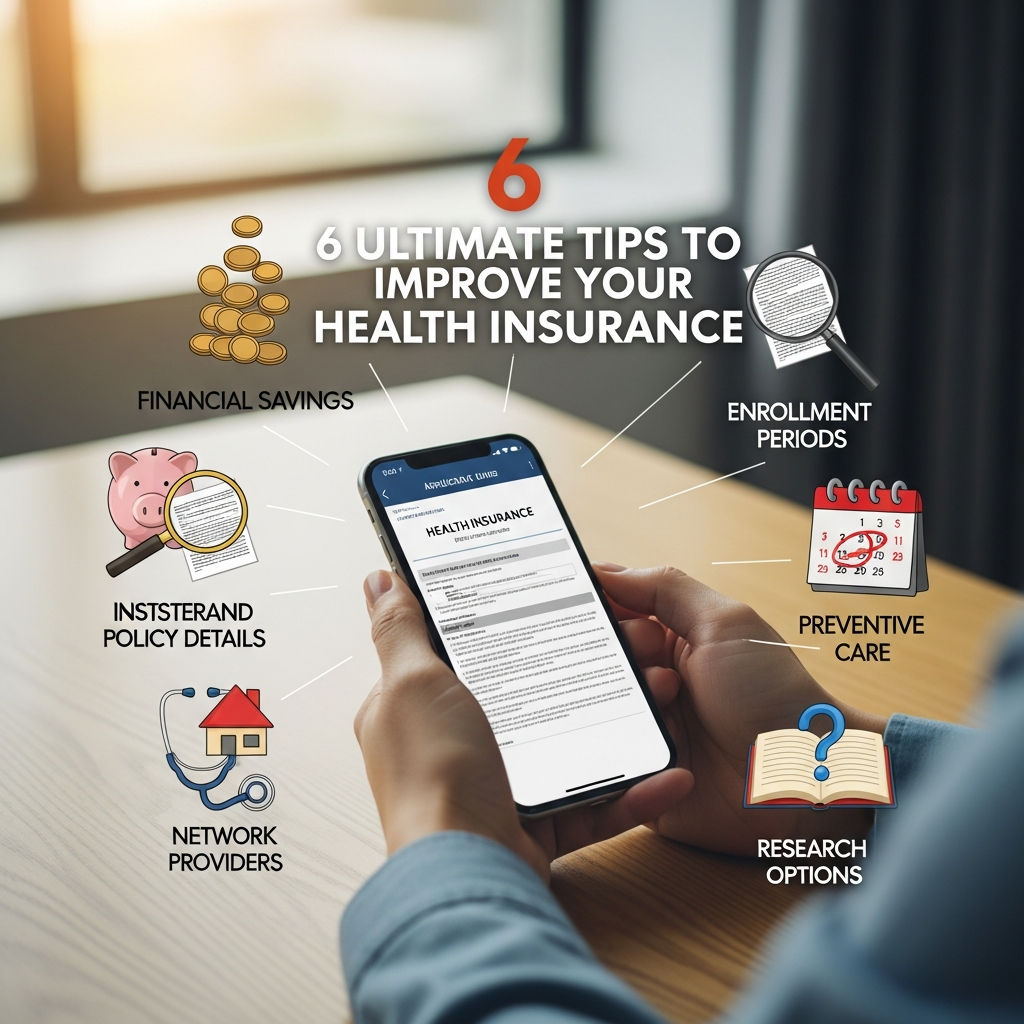
The process of securing adequate healthcare coverage is often fraught with confusion and complexity. For millions of Americans, selecting the right plan is one of the most critical financial decisions they make annually. Yet, research shows that a significant number of consumers make preventable errors that lead to higher out-of-pocket costs, limited access to necessary specialists, or even coverage gaps.
Navigating the various plans HMOs, PPOs, high-deductible options, and more requires careful consideration beyond the monthly bill. This guide outlines the top 5 mistakes people make when buying health insurance and provides actionable advice to ensure you select a plan that truly protects your health and your finances during the next Open Enrollment period.
Key Takeaways
- Mistake 1: Focusing Only on Premiums. The monthly premium is only one part of the total cost; deductibles and co-pays often represent a larger financial threat.
- Mistake 2: Ignoring Provider Networks. Choosing a plan without verifying if your current doctors are in-network can lead to massive surprise billing.
- Mistake 3: Underestimating Expected Usage. Consumers often fail to match the plan type (e.g., catastrophic vs. comprehensive) to their realistic anticipated medical needs for the coming year.
- Mistake 4: Missing Enrollment Deadlines. Missing the Open Enrollment period or failing to report qualifying life events restricts access to Marketplace coverage.
The Peril of Price Shopping: Premiums vs. Total Cost
The most common error consumers make when buying health insurance is letting the monthly premium dictate their decision entirely. While a lower premium is attractive, it almost always signals higher costs elsewhere in the plan structure.
Focusing Exclusively on Low Monthly Premiums
A low premium typically correlates with a high deductible. The deductible is the amount you must pay entirely out-of-pocket before your insurance company begins to contribute to costs (aside from preventative care, which is usually free under the Affordable Care Act). If you face a sudden illness or accident, a $7,000 deductible can immediately wipe out savings, even if your monthly premium was only $200.
Experts recommend calculating the potential Maximum Out-of-Pocket (MOOP) cost. This is the absolute ceiling on what you must pay for covered services in a year. When comparing plans, evaluate the MOOP alongside the premium to understand the worst-case scenario.
Ignoring Co-pays, Co-insurance, and Prescription Tiers
Beyond the deductible, many people overlook co-payments (fixed fees for doctor visits or specialists) and co-insurance (a percentage of the bill you pay after the deductible is met). These small costs accumulate quickly, especially for individuals managing chronic conditions.
Furthermore, prescription drug coverage is crucial. Review the plan’s formulary (list of covered drugs). If your required medications fall into Tier 3 or Tier 4, the cost difference could be substantial, negating any savings gained from a lower premium.
The Network Trap: Failing to Confirm Provider Coverage
One of the fastest ways to incur massive debt is by receiving care from an out-of-network provider, even if the procedure takes place at an in-network hospital. This critical oversight happens frequently when buying health insurance that restricts provider choice, such as Health Maintenance Organization (HMO) plans.
Understanding HMO vs. PPO Limitations
HMOs typically offer lower premiums but require you to use providers within their defined network, often necessitating a primary care physician (PCP) referral for specialist visits. Straying outside this network means the insurer pays nothing, leaving you responsible for the full bill.
Preferred Provider Organization (PPO) plans offer more flexibility, allowing you to see out-of-network doctors for a higher fee. However, even PPO networks must be checked. Never assume your long-time specialist is still covered year-to-year; networks frequently change.
Actionable Tip: Before finalizing enrollment, use the plan’s online directory (or call the insurer directly) to confirm that your primary care physician, mental health providers, and any critical specialists are explicitly listed as participating providers for the specific plan ID you intend to purchase.
Miscalculating Usage and Essential Benefits
People often fall into the trap of selecting coverage based purely on their current state of health, without accounting for potential changes or essential services they might need.
The Danger of the “Catastrophic” Mindset
Catastrophic plans are designed for young, healthy individuals who want minimal coverage just in case of a major accident. They have very low premiums but extremely high deductibles. While appropriate for some, relying on this type of plan if you anticipate needing surgery, ongoing physical therapy, or maternity care is a huge mistake.
When selecting a plan, ask yourself: How many times did I see a specialist last year? Do I anticipate any major changes, such as starting a family or planning an elective procedure? Your past usage is the best indicator of the type of metallic tier (Bronze, Silver, Gold, Platinum) that is right for you.
Neglecting Mental Health and Wellness Benefits
Parity laws mandate that most health plans cover mental health care and substance abuse treatment at the same level as physical health care. However, accessing those services often depends heavily on the specific network.
Many consumers neglect to verify the availability of local, in-network mental health professionals when buying health insurance. A plan may cover therapy in theory, but if all local therapists are out-of-network, the benefit is useless, forcing the consumer to pay thousands of dollars for necessary care.
Ignoring Timelines and Missing Open Enrollment
Timing is everything in health insurance. Unlike other types of insurance, you cannot typically enroll in or change coverage whenever you want.
Failing to Meet the Deadline
For Marketplace plans (purchased under the Affordable Care Act), Open Enrollment generally runs from November 1st through mid-January, though deadlines vary by state. Missing this window means you forfeit the ability to enroll until the next cycle, unless you qualify for a Special Enrollment Period (SEP).
SEPs are triggered by life events like marriage, divorce, birth of a child, loss of employer coverage, or moving. Failing to report a qualifying event within the strict 60-day window can result in a significant gap in coverage.
Conclusion
The landscape of health coverage is undeniably complex, but making informed decisions is the key to minimizing financial risk. Avoid the top mistakes—don’t sacrifice adequate coverage for a low premium, always verify your provider network, and accurately forecast your health needs for the coming year.
By treating the process of buying health insurance as a serious investment rather than a compulsory expense, consumers can secure comprehensive protection that provides true peace of mind and access to the care they deserve.
Frequently Asked Questions (FAQ)
What is the difference between a deductible and an out-of-pocket maximum?
The deductible is the amount you pay first before your insurance starts contributing (except for preventative care). Once the deductible is met, you usually still pay co-pays or co-insurance. The out-of-pocket maximum (MOOP) is the absolute highest amount you will have to pay for covered services in a plan year. Once the MOOP is reached, the insurance company pays 100% of all subsequent covered costs.
Is it always better to choose a PPO over an HMO plan?
Not necessarily. While PPO plans offer more flexibility and often do not require referrals to see specialists, they typically come with significantly higher monthly premiums than HMO plans. If you are comfortable staying within a defined network and want the lowest recurring monthly cost, an HMO can be an excellent choice.
What if I miss the Open Enrollment period?
If you miss the main Open Enrollment deadline, you generally cannot enroll in a new Marketplace plan until the next cycle unless you qualify for a Special Enrollment Period (SEP). SEPs are triggered by life changes like job loss, moving to a new coverage area, or birth/adoption. If you do not qualify for an SEP, you may need to seek short-term plans or other temporary coverage outside the Marketplace.
Should I choose a Bronze plan if I am generally healthy?
Bronze plans have the lowest premiums but the highest deductibles. If you are young, healthy, and have robust emergency savings (enough to cover the plan’s MOOP), a Bronze plan might save you money. However, if you have chronic conditions or cannot afford a sudden large medical bill, a Silver or Gold plan, which offers better cost-sharing, is usually a safer financial choice.