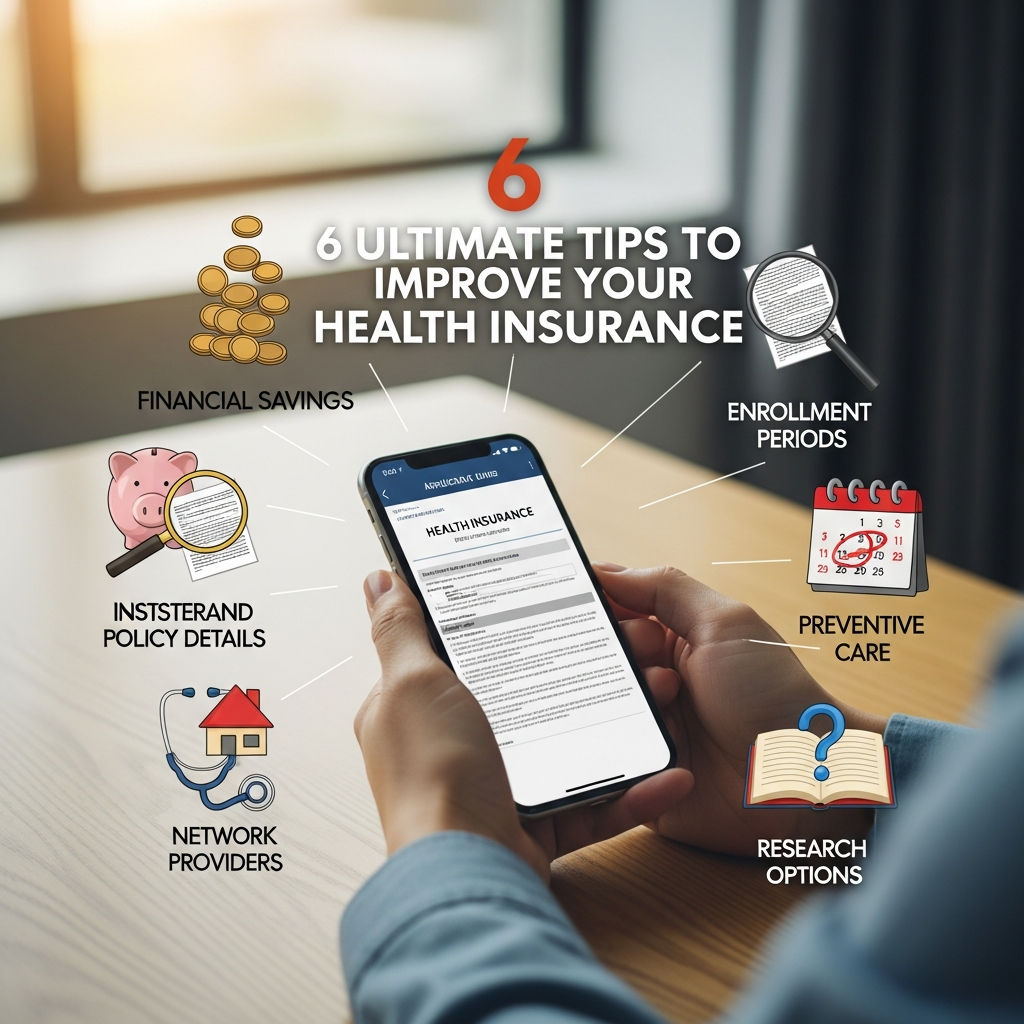
“`html
Introduction: Why Your Health Insurance Needs a Tune-Up
For most people, health insurance is a “set it and forget it” expense. We sign up during the open enrollment period, tuck the card into our wallets, and hope we never have to use it for anything serious. However, treating your health insurance as a passive monthly bill is a mistake that can cost you thousands of dollars in unnecessary premiums and out-of-pocket expenses.
Improving your health insurance doesn’t always mean switching to a more expensive plan. Instead, it involves optimizing your current coverage, understanding the fine print, and leveraging financial tools that help you keep more of your hard-earned money. Whether you are self-employed or covered through an employer, these six ultimate tips will help you maximize your benefits and minimize your costs.
1. Conduct a Rigorous Annual Plan Review
The healthcare landscape changes every single year. Insurance companies frequently adjust their “formularies” (the list of covered drugs), change their networks of doctors, and tweak deductible amounts. If you simply renew the same plan every year without looking at the updates, you might find that your favorite doctor is no longer in-network or your essential medication has jumped to a higher cost tier.
Key Factors to Evaluate During Open Enrollment:
- Total Cost of Ownership: Don’t just look at the monthly premium. Calculate your “worst-case scenario” by adding the annual premium to the out-of-pocket maximum.
- Life Changes: Did you get married? Are you planning to start a family? Have you developed a chronic condition? Your plan should reflect your current life stage, not your life from three years ago.
- Plan Type: Switch between HMO, PPO, or EPO plans based on your need for flexibility. If you travel often, a PPO is usually better; if you want lower costs and don’t mind referrals, an HMO might suffice.
2. Maximize Your Provider Network
One of the fastest ways to improve the value of your health insurance is to ensure you never accidentally step out-of-network. In-network providers have negotiated rates with your insurance company, whereas out-of-network providers can charge whatever they like, leaving you to pay the difference.
How to Stay In-Network Effectively:
Before any procedure—even a routine one—verify the status of every professional involved. This includes the surgeon, the facility, and the anesthesiologist. Under the “No Surprises Act,” patients have more protections against balance billing, but being proactive is still your best defense.
- Use the Insurer’s Portal: Always use the search tool on your insurance company’s website rather than relying on a doctor’s office saying, “We take your insurance.”
- Confirm Before Every Visit: Networks change mid-year. A quick phone call to the office can save you from a massive bill later.
3. Leverage the Power of a Health Savings Account (HSA)
If you have a High Deductible Health Plan (HDHP), you likely have access to a Health Savings Account (HSA). This is arguably the most powerful financial tool in the American tax code and a primary way to improve your health insurance strategy.
The Triple Tax Advantage:
An HSA offers three distinct tax benefits that no other account provides:
- Tax-Deductible Contributions: The money you put in reduces your taxable income for the year.
- Tax-Free Growth: You can invest the money in your HSA in stocks or mutual funds, and you pay no capital gains taxes on the growth.
- Tax-Free Withdrawals: As long as the money is used for qualified medical expenses, you pay no taxes when you take it out.
Unlike a Flexible Spending Account (FSA), HSA funds do not expire. They stay with you forever, even if you change jobs or retire, making them an excellent “stealth” retirement fund for healthcare costs in old age.

4. Optimize Your Prescription Drug Strategy
Prescription drugs are one of the most significant drivers of healthcare spending. Improving your health insurance experience involves taking control of how you source your medications. You should never assume that your insurance co-pay is the lowest price available.
Strategies for Lower Medication Costs:
- Ask for Generics: In almost every case, a generic drug is chemically identical to the brand-name version but costs up to 80% less.
- Use Comparison Apps: Tools like GoodRx or SingleCare can sometimes offer prices lower than your insurance co-pay.
- Mail-Order Services: Many insurance plans offer a 90-day supply of maintenance medications through a mail-order pharmacy for a lower price than three 30-day supplies at a retail pharmacy.
- Check “Cost Plus” Pharmacies: New transparent-pricing pharmacies (like Mark Cuban’s Cost Plus Drugs) often sell medications for a fraction of the traditional retail price.
5. Prioritize Free Preventative Care
Under the Affordable Care Act (ACA), most health plans are required to cover a range of preventative services at no cost to the patient—meaning $0 out-of-pocket, even if you haven’t met your deductible. Improving your health insurance value means taking full advantage of these “freebies.”
Take Advantage of These Zero-Cost Services:
- Annual Wellness Exams: A yearly check-up to monitor blood pressure, cholesterol, and overall health.
- Screenings: This includes mammograms, colonoscopies (starting at age 45), and screenings for diabetes or depression.
- Immunizations: Routine vaccines like the flu shot, Tdap, and others are generally covered at 100%.
By using these services, you catch potential health issues early when they are easier (and much cheaper) to treat. Think of preventative care as the “maintenance” that prevents a total “engine failure” in your health and your finances.
6. Consider Supplemental Insurance to Fill the Gaps
Standard health insurance is designed to pay the doctors and hospitals. It is not designed to pay your mortgage or buy groceries if you are unable to work. To truly “improve” your health insurance, you may need to look at supplemental policies that provide a safety net for your lifestyle.
Types of Supplemental Coverage:
- Critical Illness Insurance: Provides a lump-sum cash payment if you are diagnosed with a major illness like cancer, heart attack, or stroke. You can use this money for anything, from medical bills to travel expenses for treatment.
- Accident Insurance: Pays out if you suffer a specific injury (like a broken bone or concussion). This is particularly useful for families with active children.
- Hospital Indemnity Insurance: Pays you a set amount for every day you are confined to a hospital bed.
While these plans have an additional premium, they are often very affordable and can prevent a high-deductible plan from causing a financial crisis during a health emergency.
Conclusion: Taking Control of Your Coverage
Improving your health insurance isn’t a one-time event; it’s a continuous process of education and adjustment. By reviewing your plan annually, staying strictly within your network, and utilizing tax-advantaged accounts like HSAs, you can turn a confusing expense into a strategic asset.
Remember that the goal of health insurance is twofold: to protect your physical health through preventative care and to protect your financial health from catastrophic loss. When you apply these six tips, you ensure that your plan is working for you, rather than you working just to pay for your plan. Start today by logging into your insurer’s portal and exploring the benefits you might be leaving on the table.
“`